
Description
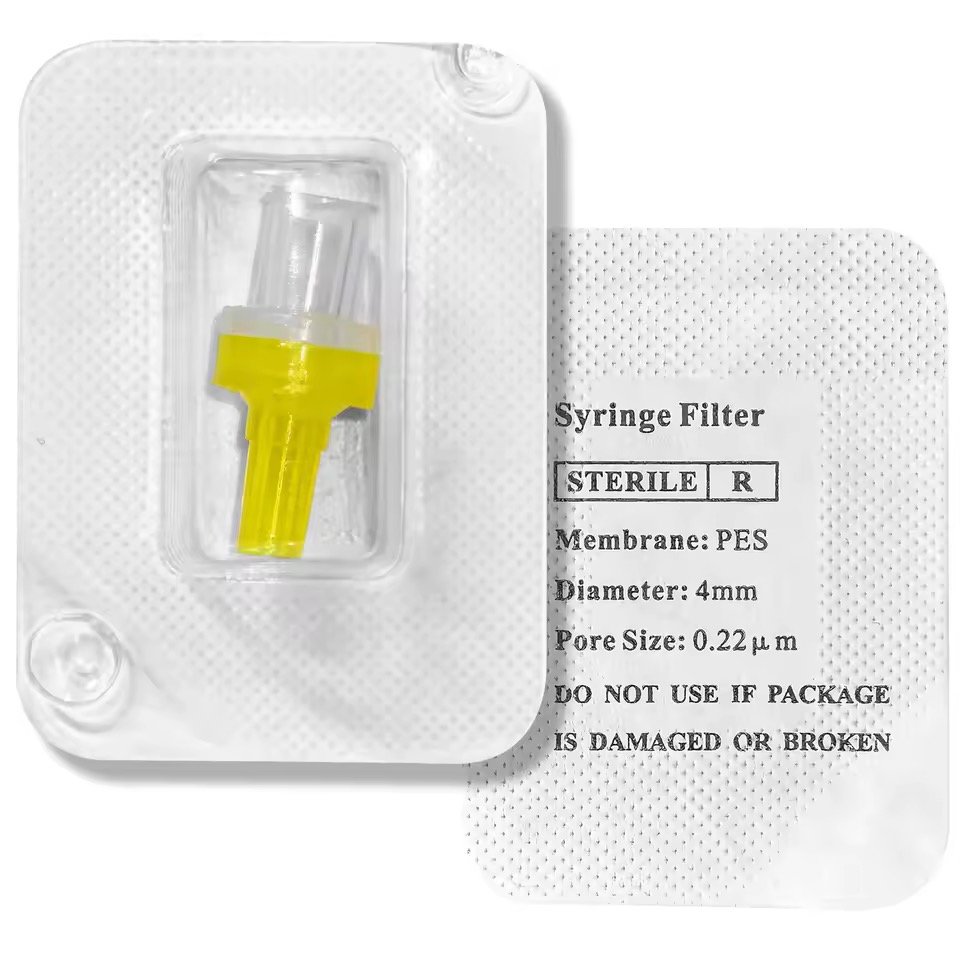
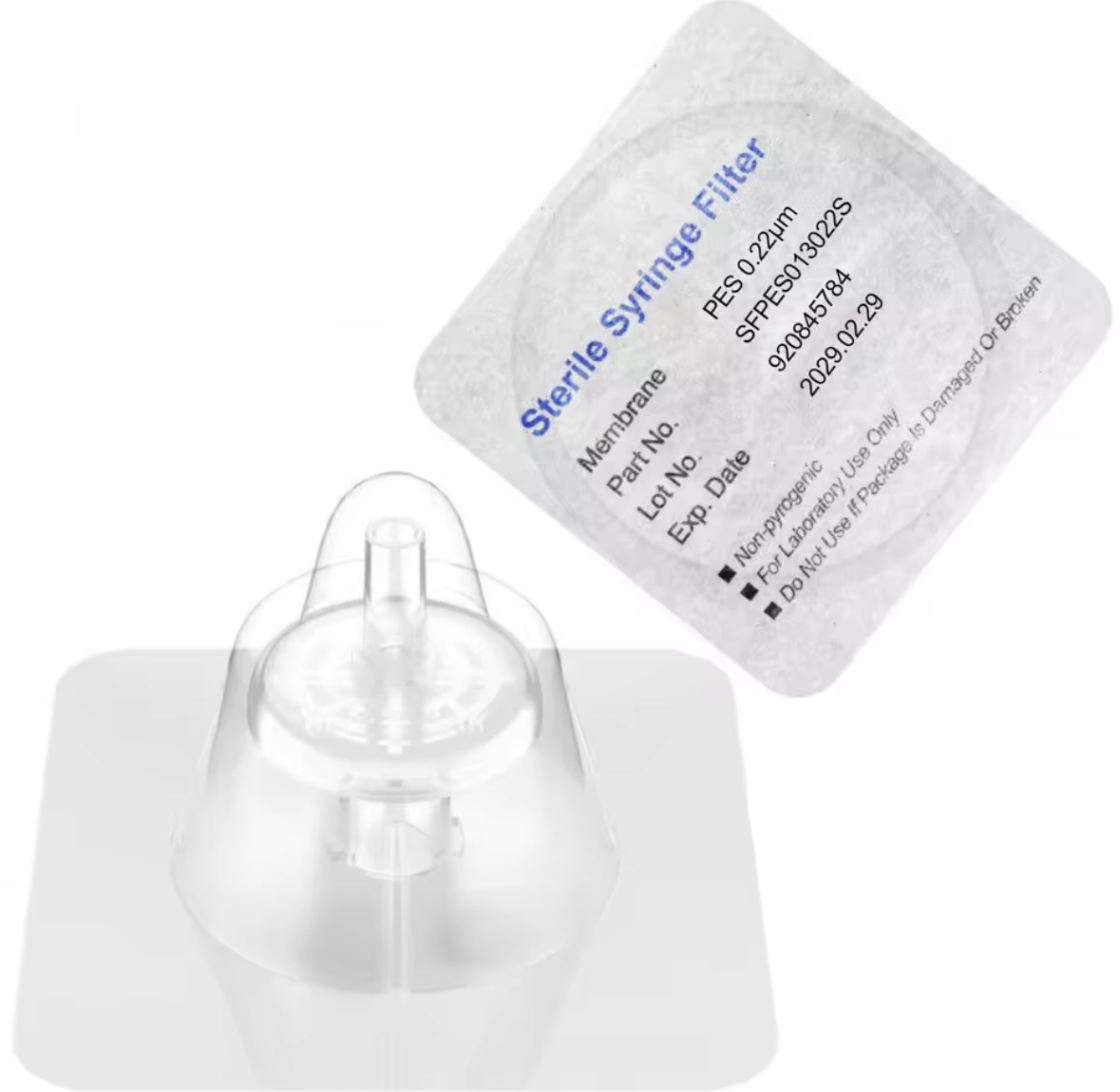
Peptide filters are sterile, single-use membrane filtration devices designed to remove particulates, bacteria, and potential contaminants from reconstituted peptide solutions. Commonly used in research and compounding settings, these filters help ensure a clean, sterile final solution prior to administration or storage.
They are typically available in 0.22 micron (µm) and 0.45 micron (µm) pore sizes, with 0.22 µm being the standard for sterile filtration.
Specifications:
- Common pore sizes: 0.22 µm (sterile-grade), 0.45 µm
- Membrane types: PES (Polyethersulfone), PVDF, Nylon
- حجم: Typically compatible with standard Luer-lock or Luer-slip syringes
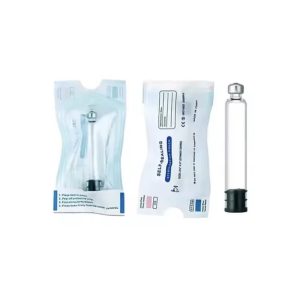
- Single-use, individually sterile-packed
Typical Usage:
- Filtering reconstituted peptides such as AOD-9604, TB-500, PT-141
- Removing undissolved particles after mixing
- Reducing risk of contamination before transferring to storage vial or cartridge
How to Use:
- Draw peptide solution into syringe
- Attach sterile filter to a Luer-lock syringe
- Push solution slowly through the filter into a sterile vial or cartridge
- Do not reuse the filter (single-use only)
Best Practice:
- Use 0.22 µm filters for maximum sterility
- Filter slowly to avoid membrane damage or pressure buildup
- Perform filtration in a clean environment
Storage:
- Store in original sterile packaging until use
- Keep in a cool, dry place away from contamination
- Do not use if packaging is damaged or opened
Note:
Peptide filters are an essential tool for maintaining solution purity and safety in peptide preparation workflows. While they significantly reduce contamination risk, they do not replace proper sterile handling techniques and procedures.
Reviews
There are no reviews yet.