
Description
Key Takeaways
- The Wolverine Stack refers to the combined, experimental use of the peptides BPC-157 and TB500 within regenerative medicine.
- BPC-157 is a locally acting peptide with vascular, inflammatory, and connective tissue effects.
- TB500 is a systemically active regenerative peptide derived from thymosin beta-4.
- Preclinical and limited human observational studies suggest potential benefits of the Wolverine Stack in musculoskeletal injury, knee pain, and muscle regeneration.
- Comparative data suggest peptide-based intra-articular injections may perform similarly to PRP and hyaluronic acid in short-term knee osteoarthritis outcomes.
- No randomized controlled trials or prospective human safety studies have evaluated the efficacy and safety of the Wolverine Stack.
- Neither peptide is FDA-approved for any therapeutic benefits.
- The dosage, duration, and route of administration for the Wolverine Stack are not standardized.
Overview of the Wolverine Stack
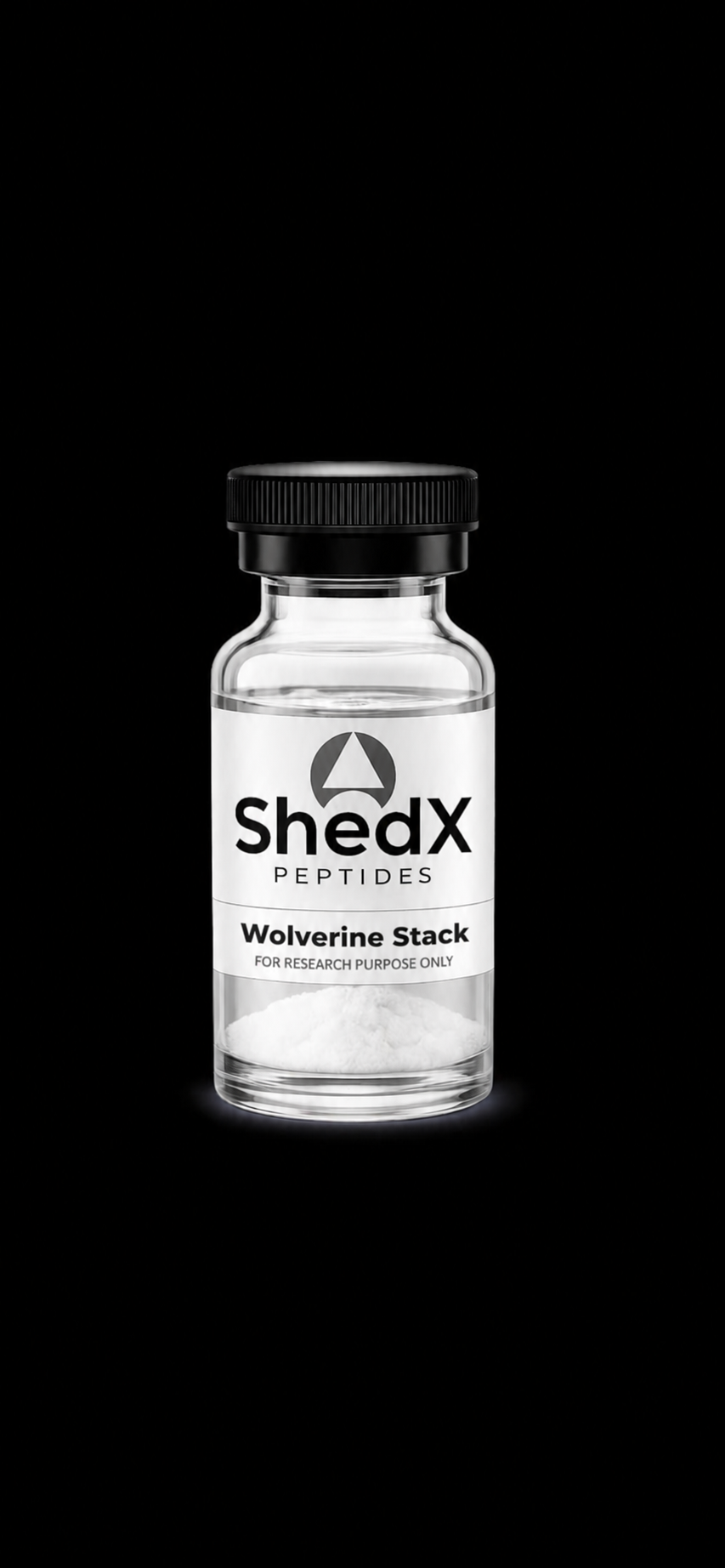
The Wolverine Stack is the BPC-157 and TB500 peptide combination for healing in regenerative medicine.
BPC-157 is a synthetic pentadecapeptide derived from a gastric protein fragment. It is a well-known locally active peptide with observed repair effects on connective tissue, muscle, and vascular environments.
TB500 is a synthetic fragment of thymosin beta-4, and it is a systemically acting regenerative peptide.
Both components of the Wolverine Stack are currently experimental compounds. Neither peptide has received approval from the U.S. Food and Drug Administration (FDA) for human therapeutic use.
BPC-157 is also prohibited under the World Anti-Doping Agency’s list of anti-doping products for athletes.
Why Combine BPC-157 and TB500?
Musculoskeletal and soft tissue healing depend on coordinated vascular support with resolution of inflammatory stress.
BPC-157 acts at the site of injury to produce a well-perfused local environment. TB500, on the other hand, has migration-oriented regenerative activity. It facilitates the cellular movement and remodeling for reorganizing injured tissue.
BPC-157 Mechanism of Action
Body protective compound-157 (BPC-157) is a peptide originally identified as a constituent of gastric secretions.
It is a pleiotropic peptide with vascular and inflammatory signaling effects. It upregulates angiogenic signaling in endothelial models through increased VEGF and VEGFR2 activity.
The vascular support increases tissue perfusion for better delivery of oxygen and nutrients. BPC-157 also interacts with nitric oxide–associated pathways that modulate endothelial tone.
In connective tissues, it causes migration and organization of fibroblasts, leading to more orderly collagen deposition.
The peptide is metabolized by the liver with a reported plasma half-life of under 30 minutes. It exerts its effects primarily within the tissue microenvironment at or near the site of injury.
TB500 as a Regenerative Peptide
TB-500 is an acetylated peptide formulation composed of a seven–amino acid sequence derived from the active region of thymosin beta-4.
Its actin-binding properties influence intracellular organization that supports the movement of endothelial cells, fibroblasts, and progenitor cells into damaged regions.
Thymosin beta-4 is a low-molecular-weight protein with a well-documented role in tissue repair processes, including wound healing, angiogenesis and peptide signaling, cellular proliferation and migration, re-epithelialization, and modulation of inflammatory responses.
Uses of the Wolverine Stack in Preclinical Studies
In preclinical research, the BPC-157 component of the Wolverine Stack peptide therapy has primarily been used as a regenerative adjunct in musculoskeletal injury.
Edwin Lee reported outcomes in a limited cohort of 16 patients presenting with knee pain, where 14 of 16 individuals (87.5%) experienced symptomatic improvement following treatment with BPC-157.1
The study observed intra-articular application of BPC-157 in reducing knee pain of degenerative and inflammatory origins.
Animal models provide a more detailed view of regenerative effects. In Pevec et al.’s rat model study, crushed gastrocnemius muscle complexes in untreated controls showed minimal spontaneous recovery. BPC-157 administration led to accelerated muscle fiber regeneration. The benefits persisted even in the presence of systemic corticosteroid exposure.2
Perović et al reports a spinal cord injury experiment in which BPC-157 administration was associated with attenuation of axonal and neuronal necrosis. Functional recovery observed in these models suggested an effect across multiple phases of secondary injury progression.3
Clinical Evidence, Safety, and Regulatory Status of the Wolverine Stack
From a preclinical standpoint, available animal toxicology studies have not shown any overt adverse effects for BPC-157. However, there is a notable lack of formal safety data.
No randomized controlled trials or prospective human safety studiesevaluating BPC-157, TB500, or their combined use have been published to date. Existing literature consists primarily of level IV and level V evidence.
A systematic review of this lower-tier evidence suggests that BPC-157 may facilitate recovery from musculoskeletal injuries, but the conclusion is drawn without safety endpoints.4
The practical concern for the safety of the Wolverine Stack is related to extrinsic safety variables, including unregulated manufacturing practices, batch variability, contamination, mislabeling, and inconsistent purity.5
At present, there are no FDA-approved therapeutic indications for BPC-157. In 2023, the FDA designated BPC-157 as a Category 2 bulk drug substance, i.e., its evidence to establish safety for human use is currently insufficient.
However, it is commercially distributed under alternative labels such as “dietary supplements” or “research-use chemicals,” categories that fall outside standard FDA premarket approval.
The World Anti-Doping Agency also prohibits TB-500 and thymosin beta-4 (Tβ4) for use in athletes based on their potential to confer performance-enhancing advantages in athletic competition.6
Wolverine Stack Dosage and Route of Administration
Since there are no standardized protocols and controlled clinical trials for the Wolverine Stack, dosage recommendations have not been established.
Injectable formulations are most commonly reported in the literature. BPC-157 is either administered subcutaneously or intramuscularly proximal to the site of injury. TB500 is also used in injectable form.
Independently produced peptide vials are available through non-pharmaceutical sources in lyophilized powder form. They are distributed in 5 mg to 10 mg vials, either as separate bottles containing BPC-157 and TB500 individually or as combined formulations.

Reviews
There are no reviews yet.